

As a mechanical engineer, I don’t buy expensive devices without understanding how they work and measuring whether they’re doing what they claim. Three treatments into using the ViQure S-LD, I tracked over 70% reduction in hair across my underarms, legs, and bikini region.
Most product reviews fall into one of two categories: generic marketing claims dressed up as new information, or vague testimonials with no substance behind them. This article is neither. What I have documented begins with my personal results using this device on Fitzpatrick IV skin, includes a log of what I experienced after each session, and follows with the technique I developed across those treatments — the kinds of details that do not make it into a user manual. It includes but is not limited to:
A guide for what progress should look like
How to work around moles without skipping coverage
Guidance on exfoliating between sessions
The science behind why certain steps are important for device effectiveness
If you are trying to understand the results that the S-LD actually produces under consistent, methodical use, this is that guide.
Note: This review began as a personal mission to find a photoepilation device that actually worked for my skin tone. I purchased the ViQure S-LD with my own money and posted my experience on Reddit totally unsponsored. ViQure spotted my review and invited me to join their affiliate program because they valued the level of detail I provided. If you find the content in this article to be helpful, you can support future articles like this one by using the links and discount codes found here when making your purchase. Science Over Fluff earns a commission at no extra cost to you.
Interested in my technical deep-dive of the ViQure S-LD? Find it here.
Table of Contents
ViQure S-LD Overview
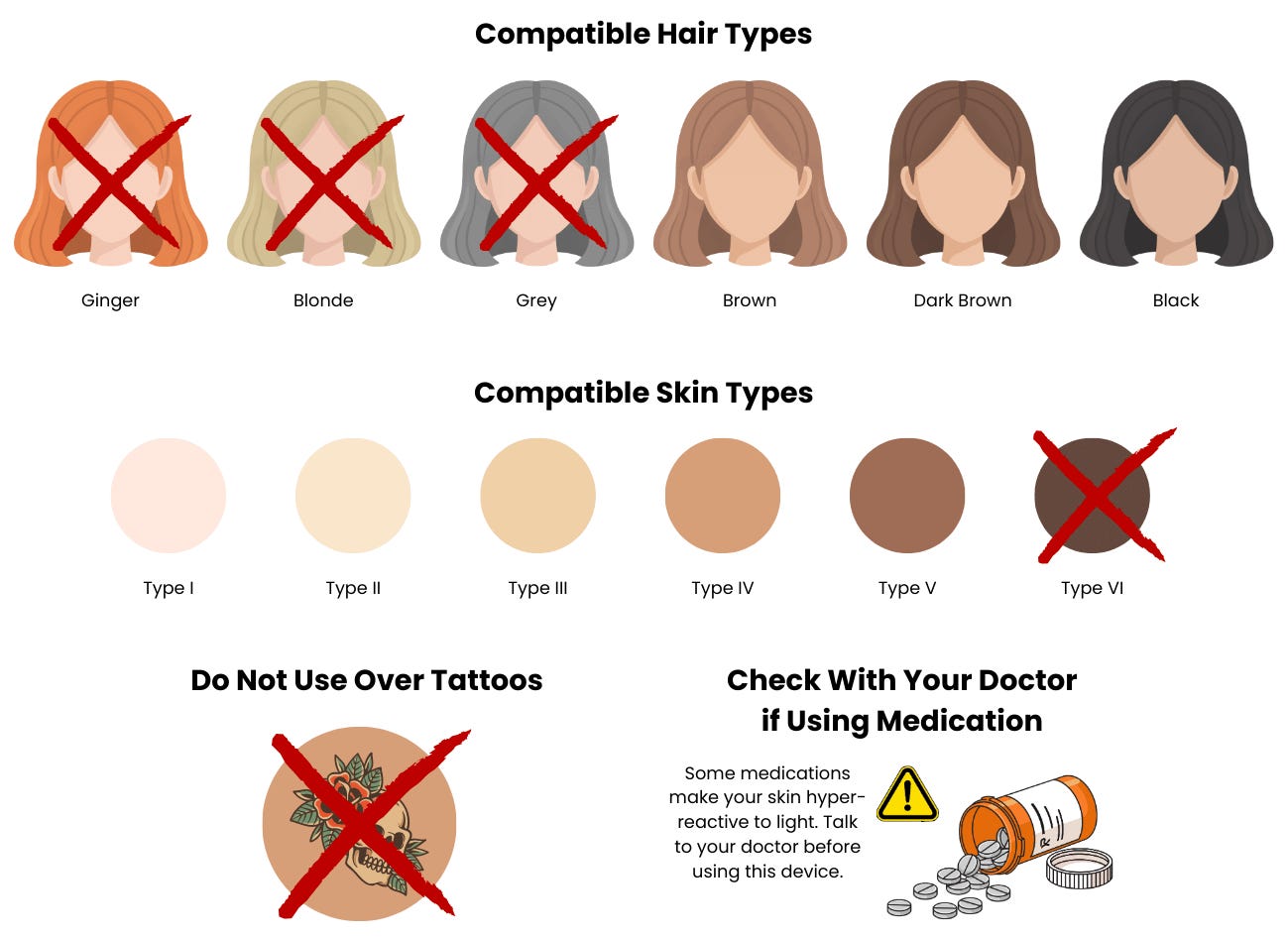
*Reference the ViQure S-LD user manual for complete list of contraindications.
Where it WINS:
✔ Ideal for tackling treatment-resistant hair (beard, bikini) where the 25 J/cm² high fluence is critical
✔ Suitable for light to medium-dark skin tones including brown skin (Fitzpatrick IV and V) where the 780-850nm wavelength makes it safer than an IPL device
✔ Great choice for those who prioritize comfort — contact cooling keeps treatment manageable even at higher energy settings
Discount Code
I was able to negotiate a reader discount on this device directly with ViQure. You can get a good deal and support content from Science Over Fluff at the same time by using the link and discount code below to make your purchase. Science Over Fluff earns a commission that funds articles like this at no extra cost to you.

ViQure S-LD Results & What to Expect
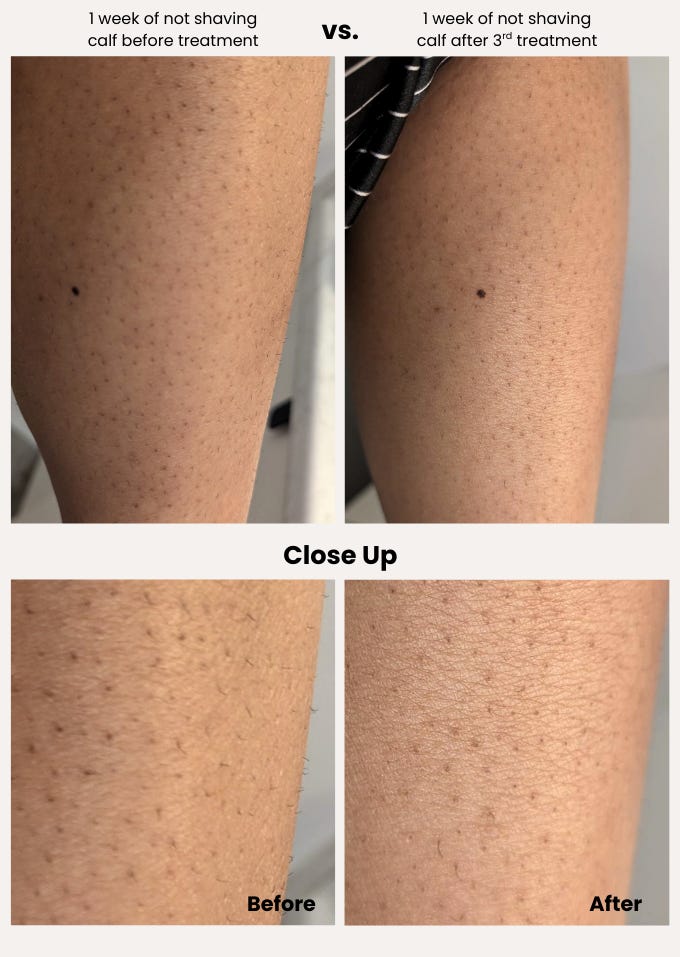
Specifics About Me
Skin Type: Fitzpatrick IV (Fitzpatrick V in some darker areas)
Hair Color: Black
Areas Treated: Upper and lower legs, underarms, bikini
Note: I have mild keratosis pilaris (often called “strawberry legs”), which is visible in the images. The darker spots around the follicle are not hairs but rather a buildup of keratin.
Treatment Log
Legs:
Treatment 1, level 1: little to no noticeable change
Treatment 2, level 2: little to no noticeable change
Treatment 3, level 3: patchiness, shedding, ~70% reduced growth
Underarms:
Treatment 1, level 1: little to no noticeable change
Treatment 2, level 2: patchiness, shedding, ~60% reduced growth
Treatment 3, level 2: patchiness, shedding, ~80% reduced growth
Bikini:
Treatment 1, level 1: patchiness, shedding, ~40% reduced growth
Treatment 2, level 1: patchiness, shedding, ~70% reduced growth
Note: This is an account of my personal experience and results. Your mileage may vary based on your specific circumstances.
What Progress Looks Like
To understand my results, it’s helpful to first understand how light-based hair removal (photoepilation) actually works. Photoepilation produces results through a process called Selective Photothermolysis where a device emits an energy dose in the form of light, referred to as “fluence”. That light converts into heat when it encounters melanin in the hair, and this heat builds up at the hair follicle until the hair producing cells are destroyed.
Hair Shedding is the body’s response to photoepilation; it usually happens 1-3 weeks post-treatment and is the process in which skin expels the dead hair from the follicle. High fluence at-home devices like the S-LD can often produce prominent shedding, similar to professional-grade clinical lasers. However, shedding and hair regrowth can vary significantly based on your hair and skin profile.
I noticed several patterns throughout my own experience.
The Fluence Connection: The S-LD has five power levels, each delivering a different energy output. What I noticed fairly quickly is that results are not linear — they are threshold dependent. Below a certain fluence level for a given treatment area, I would see some thinning but nothing dramatic. Once I crossed that threshold, results came on relatively quickly: shedding followed by patchiness within a few weeks. That threshold is dictated mostly by hair coarseness and root depth, which is why my results looked so different across treatment areas.
Coarse, Deep-Rooted Hair: While this was quite a sensitive treatment area for me, my bikini area responded right from the first treatment on level 1 and I noticed shedding within a week. This quick response is consistent with the physics in two ways:
LED and laser-based photoepilation devices emit light at near-infrared wavelengths that penetrate several millimeters into the skin, reaching deeper follicle roots such as those in the bikini area. This is a key advantage that the S-LD has over IPL devices which emit a broad spectrum of wavelengths, many of which do not penetrate as deeply.
Hair that is thick and dense has more melanin and is therefore better at absorbing and retaining heat energy from the device. This heat retention makes it easier for the device to destroy the hair follicles with thicker hair.
Finer Hair: By that same logic, finer hair necessitates more energy in the form of a higher device fluence to reach the same destructive heat. This is also consistent with my personal experience; I saw little-to-no reduction on levels 1 or 2 on my legs which have hair that is less coarse. However as soon as I bumped the device up to level 3, ~70% of the hair in the area began shedding within 1-2 weeks.
Patchy Growth and “False” Regrowth: You may notice hair returning in uneven patches. Shorter hairs may appear about a week after the session. These are often detached from the root; they can be pulled out effortlessly with fingers or will fall out naturally over time.
Thinning & Slower Growth: Some users don’t see dramatic “patchiness” right away. Instead, the hair returns much finer, lighter, and grows significantly slower than its original state.
Unexpected: Strawberry Legs Fading
I saw some mild fading of my keratosis pilaris, which is somewhat visible in the photos. While my strawberry legs have not totally cleared within 3 sessions, the spots appear lighter and my hair follicles look smaller. This was a surprising finding that was noticeable even after the first session, which suggests the treatment itself is at least part of the equation.
Interested in trying it out for yourself?
Procedure & Tips for Maximizing Results
1. Pre-Treatment
Shaving
Start by shaving the treatment area a few hours before treatment.
The Why: Photoepilation works because light emitted by the device converts to heat as it hits the hair; this heat is what destroys the hair root. If too much hair is visible above the skin, the energy is absorbed at the surface, singeing the hair and potentially burning your skin. Shaving ensures that the heat is conducted down the hair shaft directly to the follicle’s hair-producing cells.
Important: DO NOT wax, epilate, or pluck the hair in the treatment area. If there is no hair physically present in the follicle, the energy has nothing to heat up, and your session will produce no result.
Optional Hack: How Do You Cover Up Moles?
When treating larger areas, I use a white Kohl eyeliner to “white out” moles and draw a grid on my skin to easily track areas I’ve treated.
The Why: Moles are dense concentrations of melanin, which makes them a burn risk if you pulse a photoepilation device directly over them. Covering a mole with flat white pigment creates a reflective surface that bounces the beam away from that concentrated melanin, allowing you to safely treat the hair immediately surrounding the mole.
Important: Do not use “nude” or “shimmer” pencils. Nude pencils often contain iron oxides that absorb heat, and shimmery pencils can contain mica which can create light scattering. It must be flat, matte white Kohl eyeliner.
What I used: e.l.f. Smoky Kohl Eyeliner Pencil, WHITE (🔗get it here →)
How Do You Apply the Gel?
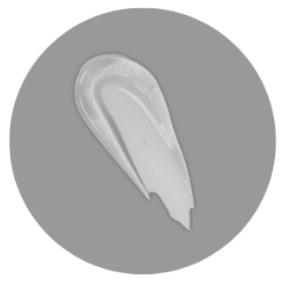
Ensure the treatment area is clean, dry, and free from any topical oils, lotions, or creams. Apply a layer of clear, water-soluble ultrasound gel about 1/8th of an inch thick.
The Why: Light scatters and partially reflects away when it goes from air to skin. Ultrasound gel bridges that air gap, eliminating the air and ensuring the light travels in a focused path into the follicle. You can read more about the physics here.
Important: Ensure your ultrasound gel is clear and water-soluble.
Avoid Tinted Gels: Dyes can absorb light energy and heat up, increasing the risk of burns.
Choose a Water-Soluble Gel: Oil-based gels can trap heat, increasing burn risk, while silicone-based gels can leave behind residues that may eventually degrade the treatment window’s performance.
My pick: Aquasonic Clear Ultrasound Gel (🔗get it on Amazon →)
Eye Protection
You will need eye protection when operating this device. Always wear the safety glasses provided.
The Why: The S-LD operates in the 780nm–850nm (NIR) light wavelength range. While light at this range does not appear bright to our eyes, it still poses a risk of eye injury with intense or prolonged exposure.
Patch Test
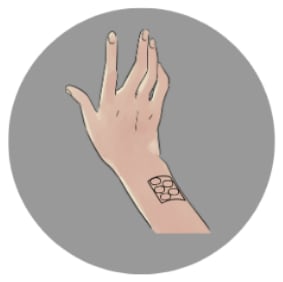
Every new treatment area needs a patch test prior to treatment because skin sensitivity can vary wildly between body parts. Apply gel, start at Level 1, and pulse. If you feel nothing, you can increase the level until you feel a warm “snap”. Wait 24–48 hours and look for signs of adverse reactions such as blistering.
A Word of Caution About Paradoxical Hypertrichosis
It is strongly advised to avoid treating areas where you only have “peach fuzz” (vellus hair). For many people, this includes the face, neck, buttocks, upper arms, and back. Paradoxical Hypertrichosis is a phenomenon where instead of destroying the follicle, the treatment actually stimulates it. This happens when the energy absorbed by the hair is too low to cause irreversible thermal damage. Since fine hairs have a very high thermal threshold, in some cases treating peach fuzz can cause fine, light hair to grow back thicker and darker.
2. Treatment Procedure
Treatment Level: Finding the Threshold

Perform your treatment at the level established during your patch test, but be prepared to adjust. If the pain is sharp, turn the level down immediately. Conversely, if the treatment doesn’t hurt at all, turn the device up by one level. Especially when treating sensitive areas, don’t be afraid to start at a lower level and work your way up.
The Why: For permanent results, the device energy must be set high enough to cause irreversible thermal damage to the hair root. If the energy is too low, you may “stun” the hair and cause it to shed, but the follicle will remain healthy enough to regrow. However, be cautious not to overdo it. It’s better to work your way up to higher settings at your own pace than to power through a level that is too high and risk burns.
The “Painless” Myth: Most companies market “painless” treatments, but this isn’t realistic. According to user reports as well as my own personal experience, using the S-LD is relatively painless most of the time, however it does feel like a rubber-band snap in particularly sensitive areas. That being said, I found it to be more tolerable than some other high fluence devices I’ve tried.
Pro Tip: As your hair thins over several sessions, you will find you need to increase the power level to continue seeing results.
Scanning vs. Single-Shot Mode
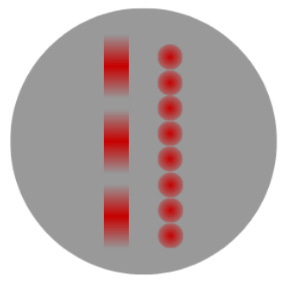
The ViQure S-LD has two operating modes:
Scanning Mode (Levels 1-3): In this mode, the device flashes automatically as you hold the button down and glide the treatment head. This is largely a convenience feature for treating large surface areas quickly.
Single-Shot Mode (Levels 4 and 5): The two highest power settings are only available in Single-Shot (or “Stamping”) mode. You must manually trigger each flash by pressing the device button, and these levels deliver the highest fluence the device can produce. This concentrated energy is where stubborn hairs that have resisted lower settings tend to finally respond.
ViQure’s current guidance is to go over each area 4-6 times per session. This isn’t redundancy — multiple overlapping passes accumulates thermal dose at the hair follicles and ensures coverage. It is the reason why this device can be used infrequently while still delivering results.
My experience: I personally do 4 passes and get strong results. Something I find helps with coverage: switching orientation between passes. If your first pass goes vertically, do the next one horizontally. Gaps in one direction get caught by the perpendicular pass.
How Often Should You Use the ViQure S-LD?

The ViQure S-LD’s user manual recommends specific treatment intervals based on the biological hair cycles of different body areas.
Underarms, Bikini Area, and Beard: 20-30 day intervals
Arms, Legs, Back, Chest, Finger, Toes, Perioral area, Hairline: 40-60 day intervals
Treatment course: 4-6 sessions
A note on realistic expectations: Manufacturer treatment timelines tend to reflect best-case scenarios based on ideal candidates with high skin-hair contrast, coarse hair, and consistent technique. In practice, many people will need a few more than 4-6 sessions to achieve significant permanent reduction, and that's completely normal. My own results took longer than the manual suggested in some areas. What matters is that the results are real and cumulative with consistent use.
Pro Tip: Consistency is key. You might see hair growing back between sessions and feel the urge to treat more frequently. However, photoepilation only works when the hair is in its “growth phase”, where it is still physically connected to the root. By following the recommended intervals, you are allowing more “resting” hairs to rotate into that active growth phase, making treatments more efficient. Consistency and patience ensure you hit the most hair at the exact moment it’s vulnerable.
3. Post-Treatment
Post-Treatment Care
Immediately following treatment, you should:
Rinse: Rinse the ultrasound gel off with soap and water. Many gels contain preservatives to keep them shelf-stable; while safe for a short procedure, leaving them on for many hours can trigger contact dermatitis.
Soothe: Though it may not immediately feel like it, your skin has undergone a harsh procedure. Many people use aloe vera gel or fragrance-free lotion to soothe the skin post-treatment.
Protect: If you are exposing the treated area, you must wear sunscreen. Post-treatment skin is highly photosensitive; sun exposure can cause dark spots or uneven skin tone, called post-inflammatory hyperpigmentation (PIH).
Monitoring: Always consult a doctor if you experience any unexpected or prolonged side effects.
Optional Hack: Should You Exfoliate After Hair Removal?
While not strictly required, exfoliation can assist loose hairs in falling out faster. Additionally, as hair becomes thinner in the treatment area, some users experience more ingrown hairs after photoepilation. Exfoliation can help by freeing trapped hairs under the skin.
Chemical Exfoliation: Using a mild chemical exfoliant between sessions helps the skin shed dead hairs.
What I used: The Ordinary Glycolic Acid 7% Toner (🔗get it here →)
Mechanical Exfoliation: Another option is a gentle physical scrub or a dry brush to manually nudge the shedding hair along.
The Safety Window: Exfoliation makes the skin significantly more sensitive. To avoid irritation:
Wait at least 3-5 days after a photoepilation treatment before exfoliating.
Stop all exfoliation at least 3-5 days before your next scheduled photoepilation session.
Do not over-exfoliate! Your skin is already in a sensitive state following photoepilation. Aggressive scrubbing or using high-percentage acids can compromise your skin barrier, leading to redness, raw spots, and increased risk of burns during your next session.
Final Verdict
Three treatments in, the S-LD has produced the kind of results I would have been skeptical of had I read them in someone else’s review: approximately 70% reduction across treated areas, with the strongest response in the bikini region and meaningful clearance on the legs once I found the right fluence threshold. For a consumer device, that is a meaningful outcome.
The case for this device is straightforward: it delivers fluence levels that most at-home devices do not, and fluence is the variable that determines whether a device produces permanent reduction at this speed. The treatment schedule and results are closer to what you would expect from a salon machine than from something you bought for home use, and it’s a fraction of the price of salon laser hair removal. If you have Fitzpatrick I through V skin with brown to black hair and you are willing to follow a consistent treatment plan, the S-LD is one of the most capable devices in this category.
→ Interested in trying it out for yourself?
Disclaimer: While I am an engineer and enjoy breaking down the science of how technology works, I am not a medical professional. The information shared here is based on my independent research and technical analysis intended for educational and informational purposes only. Please consult with a qualified professional before starting any new treatments.
Enjoy this article?
Follow Science Over Fluff on Instagram | Subscribe to the YouTube Channel
ViQure S-LD Tech Review: The Best Device for Brown Skin

Disclosure: Transparency is a core value at Science Over Fluff. This project originally began when I posted a raw, unsponsored review on Reddit after purchasing the ViQure S-LD with my own money for personal use. Parts of this technical analysis are borrowed from that original Reddit post and
Would you generally expect the ViQure S-LD to be more effective than the Ulike X for a male with Fitzpatrick III–IV skin and dark/coarse black body hair looking to treat most areas of the body (excluding the armpits)?